Funding alone does not keep music education accessible; clear coordination does. Managing funded music education programmes means aligning delivery with grant conditions, tracking spending and monitoring provision so support reaches learners as intended. Grant agreements can set out how funding availability, underspend, overspend and monitoring are handled.
Scholarships and bursaries can open doors for learners, while grants help organisations provide opportunities. The challenge is connecting that support to a programme that is practical to deliver and straightforward to account for. Good administration keeps funding, activity and progress visible without taking focus away from teaching.
This article explains how coordination tools can support funded provision, what to consider when choosing scholarships and bursaries, and how to organise spending, reporting and evidence of impact. It offers practical steps for keeping the moving parts visible, from award criteria and learner access to delivery records and outcomes.
Key Takeaways
- Bring funding partners and delivery teams together so provision, responsibilities and gaps are easier to coordinate.
- Plan activities alongside the grant budget, matching intended provision to eligible spending and available support.
- Use grant conditions to guide spending records, monitoring and evidence, including how underspend or overspend is handled.
- Choose outcome measures that show learners’ progress and help explain the programme’s impact to funders.
Table of Contents
- Improving coordination and provision
- How should a funded music education programme be planned and budgeted?
- What rules apply to spending, reporting and evidence for music education grants?
- How can programmes measure student outcomes and demonstrate impact to funders?
- Paritor: Xperios for Music Services
Improving coordination and provision
Funded music education depends on clear coordination between councils, schools, delivery partners and funders. In Cheshire East, Arts Council England funding helped create the Love Music Trust through work with local headteachers and others. This example shows how local knowledge can shape provision around schools and communities. Before activities begin, agree who leads delivery, communicates with families and tracks funding.
Common risks include communication breakdowns between partners, withdrawal of grant aid and gaps between planned activities and learners’ needs. Mitigate them by assigning clear responsibilities, recording decisions and scheduling regular partner meetings. Islington Council convenes music education partners and brokers and distributes Dame Alice Owen Foundation funding, helping partners coordinate delivery and funding responsibilities.
Use practical coordination tools to turn these arrangements into everyday routines:
- Partner register: records each organisation’s role, contact and delivery responsibility, so questions reach the right team.
- Provision map: shows where lessons, ensembles and instrument access are available, helping partners identify geographical or age-related gaps.
- Equipment and instrument register: records what is available and where it is assigned, supporting planned access and maintenance.
- Stakeholder survey: gathers views from schools, families and learners, helping coordinators compare planned provision with lived experience.
Islington’s music education partnership surveys stakeholders annually to identify provision gaps and gather views on quality. Its surveys identified a need for provision for children aged 0-5, plus clearer progression into higher education or music-industry employment. Use survey findings to adjust activities, referral routes and progression information. Islington Council’s public-sector equality duty is set out in section 149 of the Equality Act 2010, according to UK Parliament. Consider whether programme access and communication reach learners across different backgrounds and circumstances. Work by UCan Play, NYMAZ and the University of Hull, funded by NESTA, the Arts & Humanities Research Council and Arts Council England, developed ways to teach instruments in geographically isolated primary schools. That model shows how partners can coordinate expertise to address barriers created by location.
How should a funded music education programme be planned and budgeted?
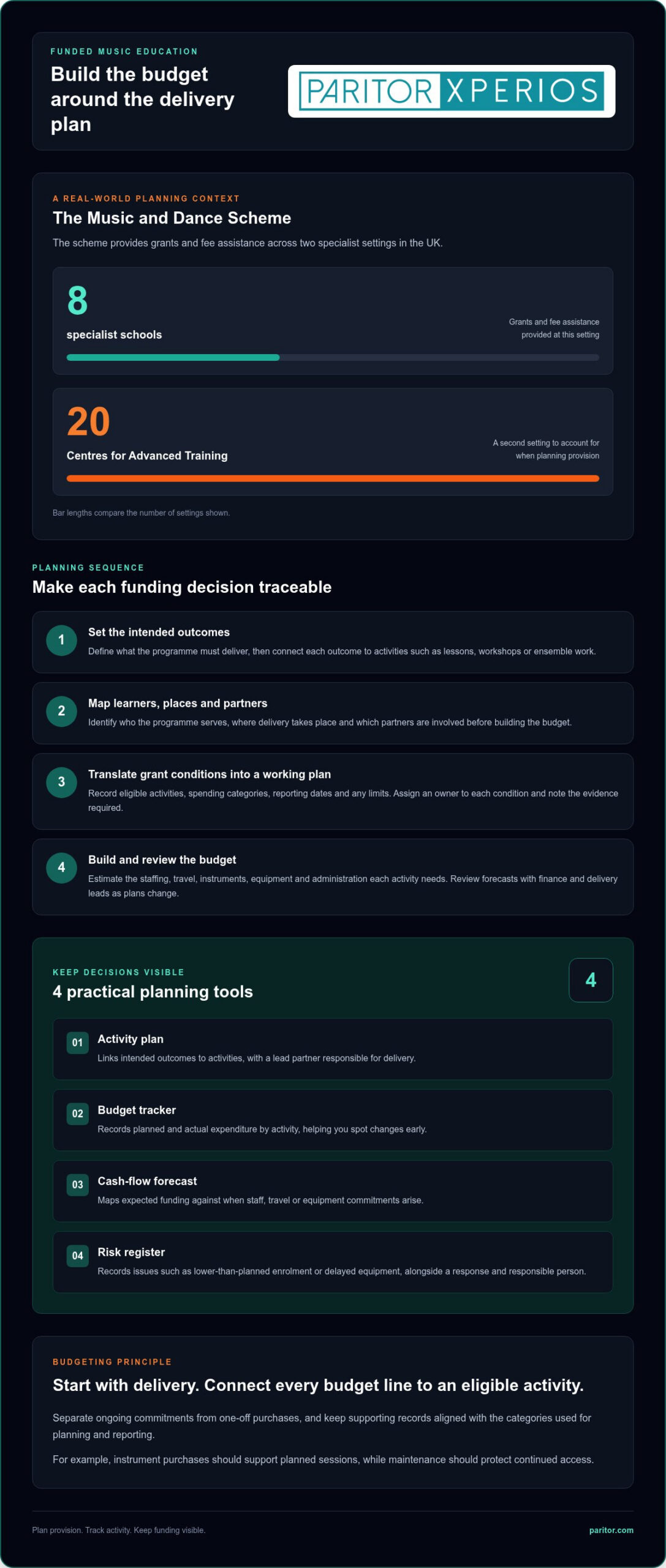
Start with the outcomes your programme must deliver, then map activities to them. A project widening access, for example, might combine school-based lessons, instrument access and progression opportunities. Identify learners, locations and delivery partners before building the budget. This helps estimate the staffing, travel, instruments, equipment and administration each activity requires. For teams managing funded music education programmes, a clear delivery plan links each activity to the resources it needs.
Next, read the funder’s conditions and translate them into a working plan. Record eligible activities, spending categories, reporting dates and any limits in one place. The Music and Dance Scheme provides grants and fee assistance at 8 specialist schools and 20 Centres for Advanced Training in the UK. This shows why your budget should reflect the programme’s setting and intended participants, rather than rely on a generic template.
Use simple planning tools to keep decisions visible:
- Activity plan: links each intended outcome to lessons, workshops or ensemble work, with a lead partner responsible for delivery.
- Budget tracker: records planned and actual expenditure by activity, helping you spot changes early.
- Cash-flow forecast: maps expected funding against when staff, travel or equipment commitments arise.
- Risk register: notes issues such as lower-than-planned enrolment or delayed equipment, alongside a response and responsible person.
Build the budget from the delivery plan, not the other way round. Separate ongoing commitments from one-off purchases, and connect each item to an eligible activity. For example, instrument purchases should support planned sessions, while maintenance should protect continued access. Set a review routine with finance and delivery leads, then update forecasts when enrolment, timetables or equipment needs change. For managing funded music education programs, consistent records help connect operational decisions with budget lines. Keep supporting records together so reporting follows the same categories used in planning. Digital schedules, booking and attendance records can support this workflow; music service administration tools can help organise operational information.
What rules apply to spending, reporting and evidence for music education grants?
Start with the grant agreement, which sets the funder’s conditions for eligible spending, monitoring and reporting. Islington Council’s grant agreements cover funding availability, underspend and overspend arrangements, monitoring, and compliance with funder conditions. Turn each condition into a task, assign an owner and note the evidence needed. This makes requirements easier to follow throughout delivery, not only at reporting time.
Keep expenditure traceable to the activity it supports. For a school workshop, retain the purchase record for materials and connect it to the session plan and attendance record. If an instrument supports several activities, record how it is used. Separate grant-funded transactions from other programme activity in your ledger, using consistent categories that match the agreement.
These tools can help organise the evidence:
- Grant-condition checklist: captures each reporting requirement, its deadline and the responsible person.
- Transaction ledger: records dates, amounts, suppliers and budget categories for grant-funded spending.
- Evidence register: links invoices or receipts with activity plans, attendance and delivery records.
- Variance log: explains differences between planned and actual spending, with actions and approval notes.
For each reporting period, reconcile the ledger against the approved budget and bank records. Investigate differences before submitting figures. A variance log is useful when delivery changes, such as a cancelled workshop or a switch from buying an instrument to repairing one. Record the reason, who made the decision and the effect on planned activities. This creates a clear account of how changes affected delivery.
Prepare reports using the same categories as the original budget. Include evidence linking expenditure to provision, such as dated attendance records, session plans and equipment records. Use consistent file names and restrict access to staff who need the information. A final review by someone outside day-to-day data entry can catch missing receipts, unclear descriptions or mismatched totals before the report goes to the funder.
How can programmes measure student outcomes and demonstrate impact to funders?
Begin with the change your programme aims to make, then choose indicators that show progress towards it. A programme widening access, for example, could track enrolment, attendance, continued participation and progression into further study. Set a starting point before delivery, then collect the same information at agreed review points. This helps distinguish activities delivered from outcomes achieved.
Combine figures with context. Attendance records can show participation, while learner feedback and teacher observations can explain barriers or changes in confidence. A social impact team works with charities receiving Social Justice Fund support to track the funding’s impact. This illustrates how regular evidence gathering can help funders understand what their support enables.
Simple tools can make measurement consistent:
- Outcome framework: connects each programme aim to an indicator and a source of evidence.
- Attendance and participation log: records who takes part and whether learners continue.
- Progress review: captures teacher observations against agreed learning goals.
- Learner feedback form: gathers participants’ views on access, experience and next steps.
Choose measures that fit the programme, not just those that are easiest to count. Liverpool Institute for Performing Arts reported that 89% of its graduates were in work four years after leaving, across the most recent four-year period described. In that period, 78% worked in the performing arts. These graduate outcomes illustrate how employment and progression measures can describe longer-term impact. A school-based project may instead focus on participation, skills development or progression to another learning opportunity.
Keep personal information limited to what your evaluation needs, and explain clearly how learner feedback will be used. Review results with delivery partners, note where outcomes differ between groups, and use the findings to shape future provision. Clear, organised student progress records can help you bring evidence together; organise student progress records alongside programme evaluation.
The BRIT School in Croydon, London, provides free education for students aged 14 to 19 who intend to pursue performing-arts careers; 57% of students are from Black, Asian or other ethnic minority/global majority backgrounds. These figures can help frame access measures. The council’s equalities screening found no negative impacts on protected characteristics and identified positive impacts relating to age, disability, race, and ethnicity. Review this evidence alongside participation and progression outcomes.
Paritor: Xperios for Music Services
Paritor’s Xperios for Music Services brings key music education administration into one cloud-based platform. Manage schedules, bookings and attendance, while automated invoicing helps organise routine administration. Instrument records and maintenance history support oversight of equipment assigned to learners and programmes. Online portals give teachers, parents and students access to relevant information. Xperios is hosted in Microsoft Azure UK data centres and includes GDPR compliance tools. If your team is coordinating funded provision alongside teaching, Xperios can bring operational records together and reduce repetitive administration. Contact Paritor to discuss your requirements.
Make room for the next stage of learning
As your programme develops, use what you learn from delivery to shape its next phase. Give partners and learners space to identify emerging needs, then turn those insights into practical priorities for future provision.
Managing funded music education programmes takes ongoing attention, but clear decisions keep administration connected to your educational purpose. Choose the next improvement that will make the greatest difference to learners, and plan how your team will put it into practice.
If you’d like to discuss how Paritor could support your organisation, contact Paritor about your needs. Take the next step with confidence and keep creating opportunities for learners.
Frequently Asked Questions
How do local music education hubs support schools and funded programmes?
Local music education hubs can connect schools with music organisations and help align provision with local needs. For example, a school seeking ensemble opportunities can work with hub partners to identify suitable activities and coordinate referrals. A shared calendar and named school contact can make arrangements clearer for teachers and families. Hubs can also bring schools together to share practical learning about reaching pupils who face barriers to taking part.