 Module · Manage Resources such as Instruments and Sheet Music
Resources
Resources is the inventory and the hire system together. It was built for musical instruments, and covers sheet music, costumes and any other equipment you lend or hire out. The office tracks what exists and where it is, teachers hold stock and issue items, and families hire items through the portal and are charged for them.
What Resources does
An inventory of everything you lend
Every item is recorded with its category – instruments and sheet music are distinct types – and a status you can see at a glance: available, in repair, disposed of with a date and a reason, or out with a hire, a teacher, a school, a pupil or a centre.
New stock goes in a batch at a time. For thirty violins from one order, you enter what they share once – group and size, make and model, value, supplier, order and invoice numbers, purchase date and where they are kept – and give each its serial number. Xperios numbers them in sequence, refuses any reference already in use, and they are ready to hire straight away.
Hire to pupils and to schools
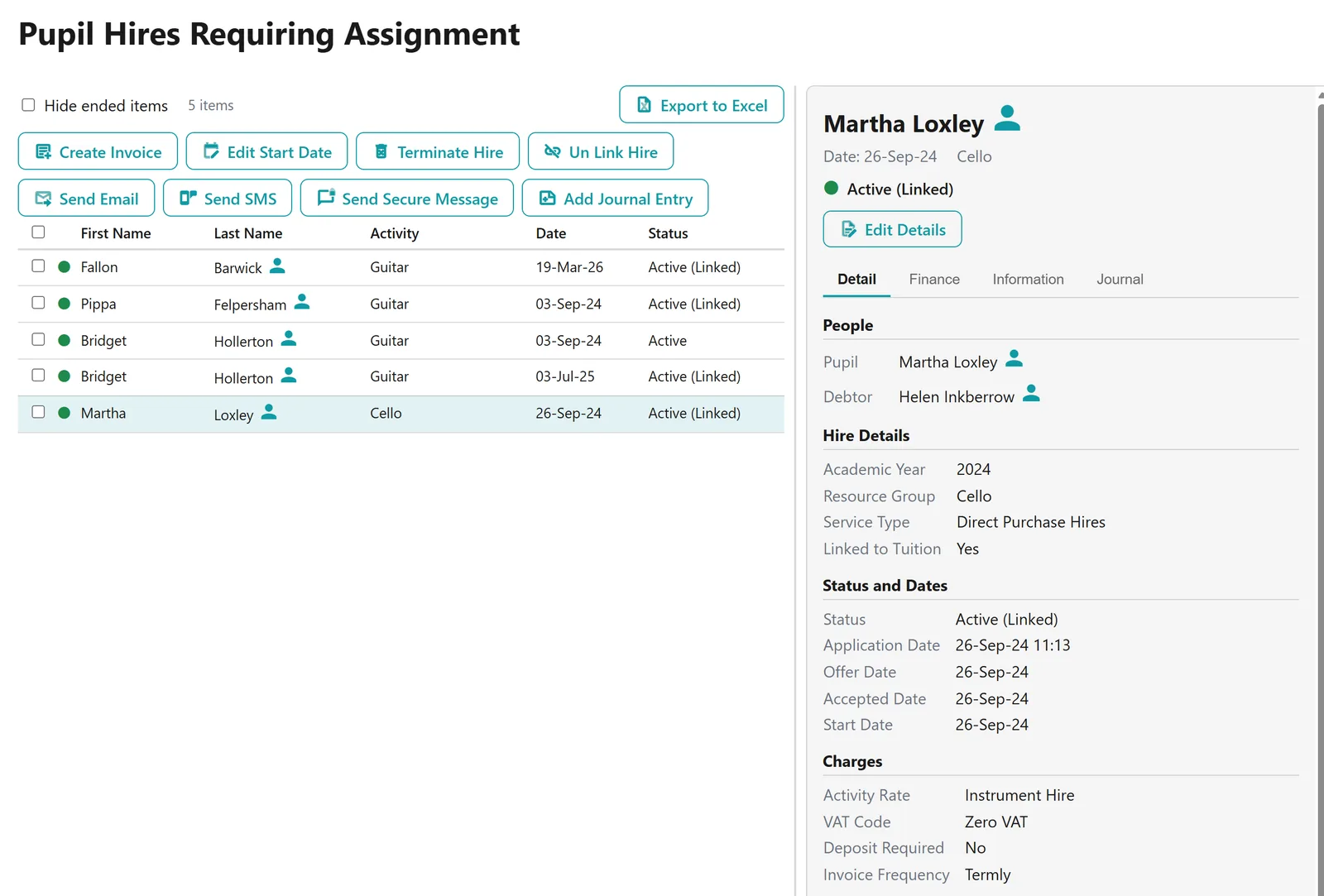
Items go out on hire to a pupil or to a school with a start date and a rate, and the charge is invoiced like anything else, so a family’s hire and tuition arrive on one statement. Hire can be subsidised or remitted just as tuition can.
Queues for what needs doing
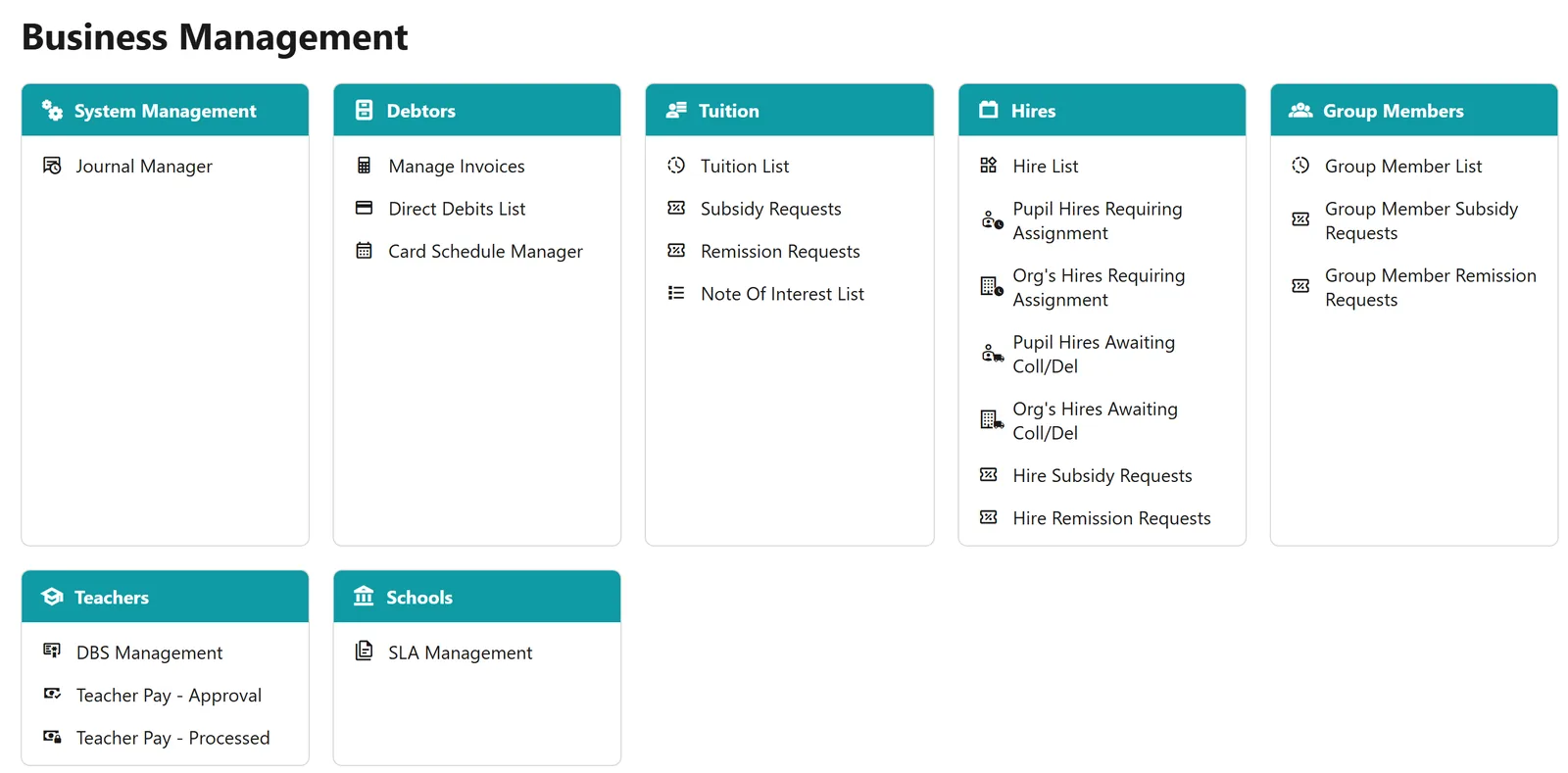
Business Management keeps a queue for each job: pupils’ and organisations’ hires waiting for an instrument, pupils’ and organisations’ hires waiting to be collected or delivered, and requests for a hire subsidy or remission waiting for a decision – with the full hire list over them all. A school borrowing a class set is a different job from a child borrowing a cello, so they have queues of their own.
Requests from the portal and the register
Parents request a hire through the portal, and a teacher can request one from the register. A parent can be offered an instrument and reminded if they don’t respond, and a hire can be linked to the lesson it belongs to, so it ends when the teaching does.
Lend instead of hire
If you lend instruments rather than hire them, applications ask whether a child will need to borrow one instead of offering a hire.
Return is recorded separately
Ending a hire stops the charge; the instrument only comes back when you record its return. That gap is deliberate: it is how you keep track of what is still out there, what is overdue and what is away for repair.
Teachers hold stock too
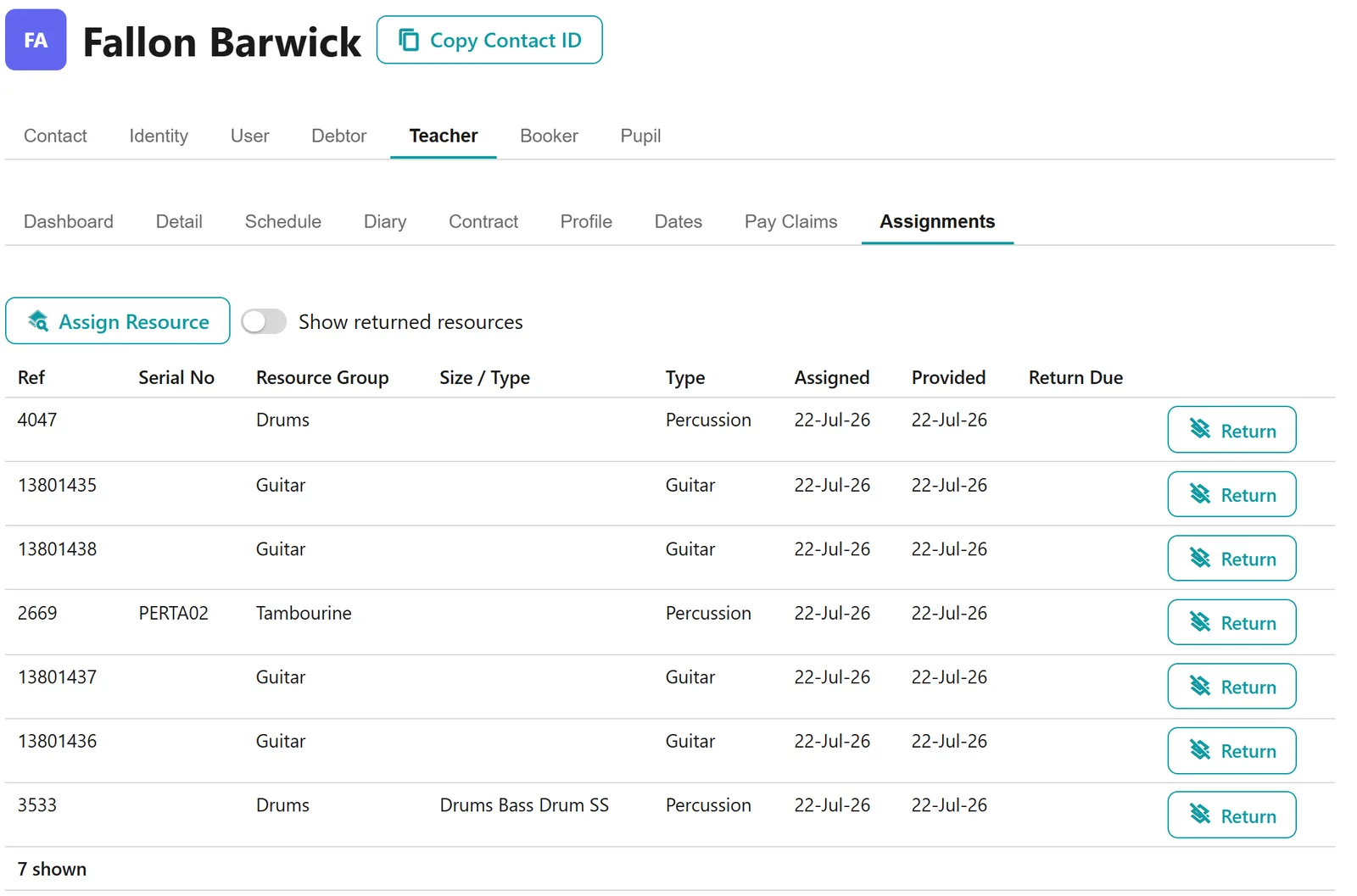
Where you allow it, teachers carry their own stock and issue instruments from the register, rather than everything passing through the office.
Resources in the Xperios guide →
Every module is built on the Xperios Framework, which shares its contacts, portals,
finances and reports with every other module: see Features.
See Xperios with your own service in mind.
Book a demonstration and we will show you Xperios working the way your organisation does, and answer your questions about moving your data across.